
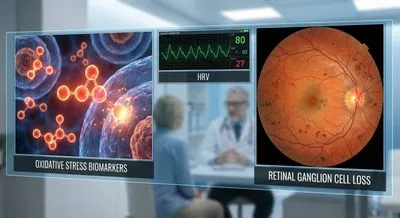
Oxidative Stress Biomarkers, HRV, and Retinal Ganglion Cell Loss
In this article, we explain what oxidative stress markers like F2-isoprostanes, malondialdehyde (MDA), and 8-hydroxy-2’-deoxyguanosine (8-OHdG) are,...
Deep research and expert guides on maintaining your visual health.
In this article, we explain what oxidative stress markers like F2-isoprostanes, malondialdehyde (MDA), and 8-hydroxy-2’-deoxyguanosine (8-OHdG) are,...
Blind spots often develop gradually without symptoms. Start a free trial and take a quick visual field test to spot changes early.
Find Out NowF2-isoprostanes are chemical compounds formed when free radicals attack fatty acids in cell membranes, causing a process called lipid peroxidation. They are produced consistently in the body and are relatively stable, so they can be measured reliably in blood, urine, or tissue samples. Because their levels rise when tissues experience oxidative stress, researchers often use them as a trustworthy indicator of cell membrane damage. This matters because healthy cell membranes are essential for transporting nutrients, sending signals, and protecting cells from harm. Elevated F2-isoprostanes have been linked with a wide range of conditions, including heart disease, lung disease, diabetes, and some brain disorders. Measuring these compounds can help track disease progression, evaluate environmental exposures like pollution or smoke, and test the effectiveness of antioxidant therapies. Because they are considered more specific and reliable than some older tests, they are often called a gold-standard marker of lipid oxidative damage. However, their levels are one piece of the puzzle and work best when interpreted together with clinical findings and other tests. Modern laboratory techniques provide precise measurements, but results can vary by method so consistency is important for comparing studies. Overall, F2-isoprostanes give researchers and clinicians a clear signal that fats in cell membranes are being damaged by oxidative processes.