
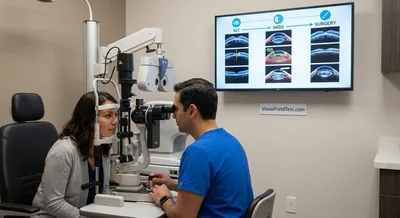
SLT’s Evolving Role Relative to MIGS and Surgery
SLT is often recommended either before starting drops or after medications alone can’t reach the target pressure. Being “selective,” the laser...
Deep research and expert guides on maintaining your visual health.
SLT is often recommended either before starting drops or after medications alone can’t reach the target pressure. Being “selective,” the laser...
Trabeculoplasty is a laser procedure used to help lower pressure inside the eye by improving the eye’s natural drainage system. It targets the trabecular meshwork, a spongy area at the front of the eye where fluid normally leaves, and stimulates changes that let fluid flow out more easily. There are different types of this procedure; some use thermal energy and others use low-energy, selective lasers that cause minimal tissue damage. It is usually done in an outpatient clinic, takes only a few minutes, and patients often return to normal activities quickly. The goal is to reduce intraocular pressure, which is the main risk factor for damage to the optic nerve in glaucoma. Many people choose this option to lower or delay the need for daily eye drops, which can be hard to keep up with over time. While it can be effective for months to years, its effect may lessen and sometimes the procedure can be repeated, depending on the type used. Side effects are generally mild but can include temporary inflammation, eye discomfort, or, rarely, a brief rise in pressure that needs treatment. Because it is less invasive than incisional surgery, it is often considered earlier in the treatment plan for open-angle glaucoma or elevated eye pressure. Ultimately, trabeculoplasty offers a relatively quick, clinic-based way to help protect vision by lowering eye pressure, but it requires follow-up to monitor how well it is working.