
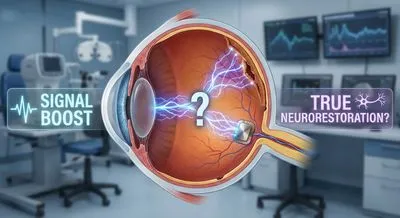
Electrical Stimulation for Glaucoma: Signal Boost or True Neurorestoration?
Experimental work suggests several ways brief currents can boost neural survival and plasticity. One class of effects is neurotrophic upregulation:...
Deep research and expert guides on maintaining your visual health.
Experimental work suggests several ways brief currents can boost neural survival and plasticity. One class of effects is neurotrophic upregulation:...
Blind spots often develop gradually without symptoms. Start a free trial and take a quick visual field test to spot changes early.
Find Out NowTranscorneal TAS is a method of delivering small electrical pulses across the cornea, the clear front surface of the eye, to influence cells inside the eye and along the visual pathway. In practice, it involves placing electrodes on or near the corneal surface so that a controlled current passes through the eye tissues; the goal is to stimulate retinal cells, support nerve signaling, or change blood flow in targeted regions. Because the cornea provides a direct route to deeper eye structures, this approach can produce focused effects without more invasive surgery. People undergoing this kind of stimulation may feel mild sensations, and the procedure is typically done under carefully controlled settings to manage comfort and safety. Scientists are interested in it because it might help protect vulnerable nerve cells, slow degeneration, or promote repair processes, but evidence is still under study and outcomes can vary. Potential benefits must be balanced against risks like corneal irritation, infection, or discomfort, so sterilization and precise control of the current are important. For someone considering this option, it helps to know that transcorneal TAS is an experimental or specialized therapy in many contexts and should be discussed with eye care professionals who can explain how it might fit with other treatments. Understanding the basics gives you a clearer sense of why researchers use this route and what to expect from ongoing studies.