
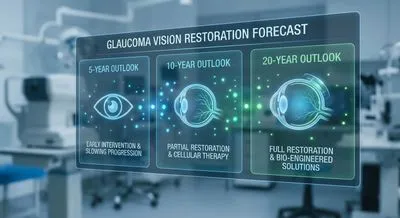
Forecasting Glaucoma Vision Restoration: 5-, 10-, and 20-Year Outlook
In the next few years, the emphasis will be on neuroprotection/neuroenhancement – therapies that aim to preserve or slightly improve the function of...
Deep research and expert guides on maintaining your visual health.
In the next few years, the emphasis will be on neuroprotection/neuroenhancement – therapies that aim to preserve or slightly improve the function of...
Our visual field test is inspired by the perimetry methods eye care professionals use. Check for blind spots and track changes over time.
Test Your VisionRetinal implants are tiny electronic devices placed in or near the light-sensing layer at the back of the eye to restore some visual function. They work by detecting light or receiving signals from an external camera, converting those signals into electrical pulses, and stimulating remaining retinal cells so the brain receives visual information. Surgery is required to position the device, and patients often need training to interpret the new type of visual input, which tends to be low-resolution at first. These implants can help people perceive light, shapes, and movement, improving mobility and independence even if they cannot restore normal sight. Limitations include limited image detail, the need for functioning pathways from the eye to the brain, and potential surgical risks. Advances in materials, electronics, and surgical methods are gradually improving image quality and reliability. For many people, retinal implants offer a practical option when biological repair is not possible, and they can be combined with other treatments over time. Knowing how the technology works, what it can and cannot do, and what rehabilitation involves helps people weigh whether it could be a useful choice for their situation.