
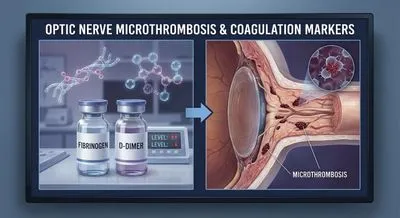
Coagulation markers (fibrinogen and D-dimer) and optic nerve microthrombosis
As a result, researchers have suggested measuring clotting markers like fibrinogen and D-dimer to see if they predict optic nerve problems. This...
Deep research and expert guides on maintaining your visual health.
As a result, researchers have suggested measuring clotting markers like fibrinogen and D-dimer to see if they predict optic nerve problems. This...
Blind spots often develop gradually without symptoms. Start a free trial and take a quick visual field test to spot changes early.
Find Out NowBlood clot markers are substances or measurements in the blood that indicate how actively the body is forming and breaking down clots. Doctors commonly measure things like D-dimer, fibrinogen, platelet counts, and clotting times to get a sense of whether clotting is happening too much or too little. Some markers rise when clots are breaking down, while others increase when the body is in a pro-clotting state. These markers are tested with a simple blood draw and lab analysis, so they are widely available in hospitals and clinics. Because clotting problems can be subtle, these measurements give doctors objective information that complements symptoms and imaging. Knowing these markers matters because abnormal results can point to dangerous conditions like deep vein thrombosis, pulmonary embolism, stroke, or problems with the blood vessels. They are also useful for monitoring how well treatments such as blood thinners are working, or for checking whether an infection or inflammation is driving clotting activity. However, a single abnormal result does not always mean a serious disease; levels can change with age, pregnancy, recent surgery, or chronic illness. That’s why clinicians interpret them alongside a patient’s history, physical exam, and other tests. Overall, these markers help guide diagnosis and treatment decisions that can prevent organ damage and save lives.