

Hydrogen Water Research Compiled: Studies, Dosages, Applications, and Outcomes
Hydrogen-rich water is made by dissolving hydrogen gas (H₂) into water. This can be done by electrolysis (breaking water into hydrogen and oxygen) or...
Deep research and expert guides on maintaining your visual health.
Hydrogen-rich water is made by dissolving hydrogen gas (H₂) into water. This can be done by electrolysis (breaking water into hydrogen and oxygen) or...

Scientific studies of molecular hydrogen are still new and cautious. Some research suggests hydrogen-rich water may have antioxidant effects, but...

Many experts agree that chronic glaucoma is not just about pressure – cell damage from oxidative stress plays a major role. For example, a 2016 PLOS...
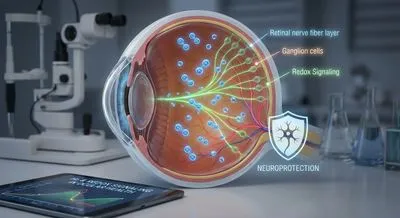
Beyond pressure-related injury, H₂ has shown benefit in other eye models. In diabetic-like rodents, oral H₂ water improved abnormal retinal blood...
Blind spots often develop gradually without symptoms. Start a free trial and take a quick visual field test to spot changes early.
Find Out NowMolecular hydrogen is the simplest form of hydrogen made of two hydrogen atoms bonded together, written as H2. It is a colorless, odorless gas that moves easily through tissues because it is very small and neutral. In biological systems it can interact with certain reactive molecules and help reduce oxidative stress, which is a form of chemical damage linked to many diseases. Unlike many broad antioxidants, molecular hydrogen appears to selectively neutralize the most damaging reactive species while leaving useful signaling molecules alone. Because of its size and selectivity, it can be delivered in different ways — inhaled, dissolved in water to drink, or applied in other forms — to reach organs and cells. Early studies suggest it may reduce inflammation, protect cells from injury, and support healing in a range of conditions, though much of the evidence is still preliminary. Safety at tested doses looks promising, but researchers say more rigorous clinical trials are needed to confirm benefits and ideal dosing. For anyone curious about new, low-cost approaches to limit cellular damage, molecular hydrogen is an intriguing area to follow as science progresses.