
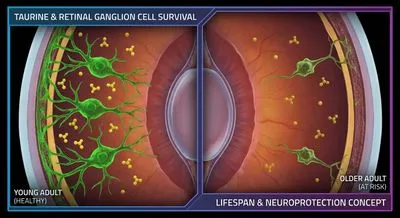
Taurine and Retinal Ganglion Cell Survival Across the Lifespan
Taurine plays key cellular roles beyond being a nutrient. In the retina it acts as an organic osmolyte, helping cells adjust their volume under...
Deep research and expert guides on maintaining your visual health.
Taurine plays key cellular roles beyond being a nutrient. In the retina it acts as an organic osmolyte, helping cells adjust their volume under...
Our visual field test is inspired by the perimetry methods eye care professionals use. Check for blind spots and track changes over time.
Test Your VisionCalcium homeostasis is the body's system for keeping calcium levels steady in the blood, inside cells, and in bone. Calcium is a key mineral that helps bones stay strong, muscles contract, nerves send signals, and blood clot properly, so the body tightly controls where calcium is and how much is available. The bones act as a large storage bank, while the intestines, kidneys, and hormones decide how much calcium is absorbed, kept, or removed from the body. Important hormones such as parathyroid hormone, vitamin D, and calcitonin adjust calcium movement between blood, bone, and urine in response to what the body needs at the moment. Inside cells, calcium is used as a short-lived messenger that turns on processes like muscle contraction or release of chemicals from nerve cells; special pumps and channels move calcium in and out of storage compartments to prevent harmful buildup. If calcium balance is disrupted, it can cause problems like weak bones, muscle cramps, irregular heartbeats, or confusion and seizures. Doctors monitor calcium and related markers to diagnose bone disease, kidney problems, and hormonal disorders. Keeping calcium within the right range is essential for everyday functions from standing and moving to thinking and healing.