
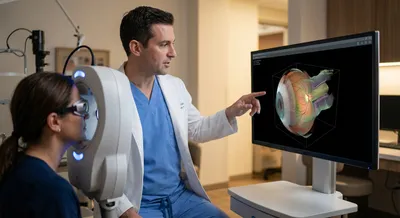
A New Way to Read Eye Scans in Glaucoma: Can 3D Nerve Fiber Shape Improve Detection?
To check the RNFL, doctors commonly use optical coherence tomography (OCT), a non-invasive imaging test that takes cross-sectional “slice” pictures...
Deep research and expert guides on maintaining your visual health.
To check the RNFL, doctors commonly use optical coherence tomography (OCT), a non-invasive imaging test that takes cross-sectional “slice” pictures...
Blind spots often develop gradually without symptoms. Start a free trial and take a quick visual field test to spot changes early.
Find Out NowNew technology refers to recent inventions, tools, or methods that change how things are done. It can be a physical device, like a new medical scanner or sensor, or a software advance such as a faster algorithm or an app that does a job more accurately. What makes something new technology is that it offers a different or better way to solve a problem than older methods. These advances can make processes faster, more accurate, less expensive, or available to more people. They can also open up new possibilities we did not have before, such as remote monitoring or more detailed images. But new technology also brings questions about safety, cost, training, and regulation that must be worked through. It often goes through trials and reviews before it becomes widely used. Over time, successful new technology becomes a routine part of daily life and work. Understanding how it works and its benefits helps people make informed choices about adopting it. New technology matters because it shapes the tools we use and can improve health, convenience, and productivity for many people.