
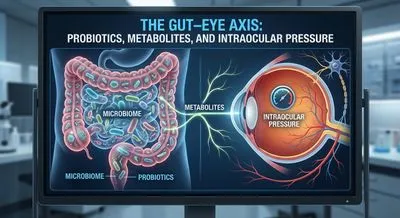
The Gut–Eye Axis: Probiotics, Metabolites, and Intraocular Pressure
SCFAs are fatty acids with fewer than six carbon atoms, mainly acetate, propionate, and butyrate, produced by gut bacteria digesting fiber. They...
Deep research and expert guides on maintaining your visual health.
SCFAs are fatty acids with fewer than six carbon atoms, mainly acetate, propionate, and butyrate, produced by gut bacteria digesting fiber. They...
Screen your peripheral vision from home — no downloads, no waiting rooms. Sign up for a free trial and test in under 5 minutes.
Bile acids are chemicals made by the liver that help the body digest fats and absorb vitamins. Beyond digestion, they act like messengers that travel in the blood and tell cells how to behave. Some of these molecules can reach the retina, the light-sensing layer at the back of the eye. When bile acids interact with retinal cells they can change cell metabolism, inflammation, and survival. This matters because changes in these processes can influence common eye problems such as age-related degeneration, diabetic damage, or stress-related nerve loss. Certain bile acids may protect retinal cells from damage, while others might make inflammation or cell stress worse. Scientists are studying whether measuring bile acids could help detect eye disease earlier or guide treatment choices. Researchers are also testing whether altering bile acid signals—by diet, medicines, or microbes in the gut—could slow disease or protect vision. For patients and doctors, understanding how these liver-made molecules affect the retina opens new possibilities for tests and treatments that work beyond the eye itself. In short, bile acids in the retina are an example of how body systems are connected, and they offer fresh ways to think about preserving sight.