
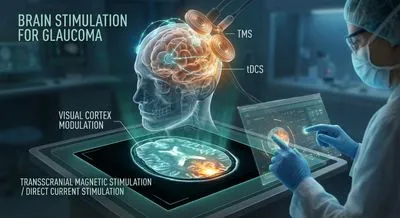
Brain Stimulation for Glaucoma: tDCS, TMS, and Visual Cortex Modulation
Vision outcomes: Measured outcomes have included visual field indices (e.g. detection accuracy or mean defect in perimetry) and sometimes contrast...
Deep research and expert guides on maintaining your visual health.
Vision outcomes: Measured outcomes have included visual field indices (e.g. detection accuracy or mean defect in perimetry) and sometimes contrast...
Screen your peripheral vision from home — no downloads, no waiting rooms. Sign up for a free trial and test in under 5 minutes.
Transcranial magnetic stimulation (TMS) is a noninvasive technique that uses brief magnetic pulses to stimulate nerve cells in the brain. A coil placed on the scalp generates a changing magnetic field that passes through the skull and induces tiny electrical currents in targeted brain tissue. Those induced currents can activate or temporarily disrupt the behavior of neurons, allowing doctors and scientists to probe and influence specific brain areas. TMS can be used for mapping brain function, studying how different regions contribute to behavior, and as a treatment tool for certain conditions. It is more focal than some other stimulation methods, meaning it can target smaller regions of the cortex with greater precision. Clinically, TMS has gained approval for treating depression that has not responded to medication, and it is being explored for other problems like migraine, movement disorders, and rehabilitation after stroke. Sessions are usually done in a clinic by trained staff, and effects can be immediate for testing or build up over multiple treatments for therapeutic benefit. Side effects are generally mild, including scalp discomfort and headache, but a rare risk of seizure exists, so screening and safety procedures are important. Researchers like TMS because it offers a way to causally link brain activity to behavior by temporarily changing the function of a targeted region. Its ability to noninvasively influence brain circuits makes it a valuable tool for both clinical care and basic neuroscience research.