
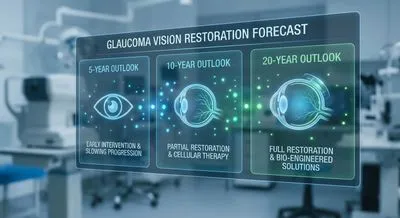
Forecasting Glaucoma Vision Restoration: 5-, 10-, and 20-Year Outlook
In the next few years, the emphasis will be on neuroprotection/neuroenhancement – therapies that aim to preserve or slightly improve the function of...
Deep research and expert guides on maintaining your visual health.
In the next few years, the emphasis will be on neuroprotection/neuroenhancement – therapies that aim to preserve or slightly improve the function of...
Visual field loss from conditions like glaucoma can go unnoticed. Start a free trial and screen for potential blind spots in minutes.
Neurotechnology refers to tools and devices that interact directly with the nervous system to read, influence, or repair its activity. This includes things like implants that can record brain signals, wearables that monitor nerve activity, systems that stimulate nerves to reduce pain, and interfaces that let people control computers or prosthetic limbs with thought. Many of these technologies combine hardware, software, and biological knowledge to translate electrical activity in the brain or nerves into useful information or therapeutic action. Researchers and companies develop these systems to help people with movement disorders, paralysis, epilepsy, chronic pain, and sensory loss by restoring function or reducing symptoms. Some forms of neurotechnology aim to restore senses, such as devices designed to help recover vision or hearing, while others support mental health by adjusting neural circuits. The field is growing quickly because advances in sensors, computing power, machine learning, and materials make devices smaller, smarter, and safer than before. Neurotechnology matters because it can directly change how the nervous system works, offering the possibility of life-changing treatments and assistive tools. At the same time, it raises important questions about safety, privacy, informed consent, and unequal access, since devices that read or change brain activity touch on personal autonomy. As the technology spreads, society will need clear rules and careful research to make sure benefits outweigh risks. For individuals, neurotechnology can mean new ways to regain independence, communicate, and manage health conditions that were once untreatable.