
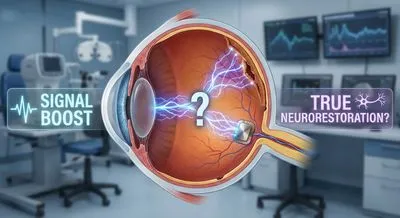
Electrical Stimulation for Glaucoma: Signal Boost or True Neurorestoration?
Experimental work suggests several ways brief currents can boost neural survival and plasticity. One class of effects is neurotrophic upregulation:...
Deep research and expert guides on maintaining your visual health.
Experimental work suggests several ways brief currents can boost neural survival and plasticity. One class of effects is neurotrophic upregulation:...
Our visual field test is inspired by the perimetry methods eye care professionals use. Check for blind spots and track changes over time.
Test Your VisionElectrical stimulation refers to the controlled use of small electrical currents to influence nerves, muscles, or other tissues in the body. In medicine, it is used in many settings—from easing pain and helping muscle recovery to experimenting with ways to protect or revive damaged nerves. For the eye, carefully applied currents can change how retinal cells or the optic nerve behave, potentially altering blood flow, cell activity, or signaling pathways. Researchers study this approach both to understand basic biology and to explore therapies for conditions where cells are stressed or dying. The treatment can be noninvasive or minimally invasive depending on where the electrodes are placed, and its effects depend on the strength, frequency, and pattern of the pulses. Because it directly affects nerve activity, electrical stimulation must be delivered under controlled conditions to avoid discomfort or unintended effects. While promising in some experimental studies, it is not a guaranteed cure and is still being evaluated for long-term benefits and safety. For patients, understanding that electrical stimulation is a medical technique with potential advantages and risks helps set realistic expectations and encourages informed discussions with clinicians.