
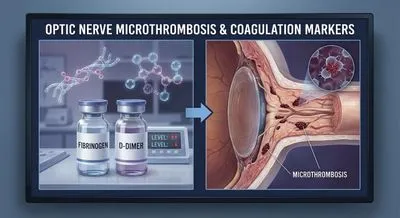
Coagulation markers (fibrinogen and D-dimer) and optic nerve microthrombosis
As a result, researchers have suggested measuring clotting markers like fibrinogen and D-dimer to see if they predict optic nerve problems. This...
Deep research and expert guides on maintaining your visual health.
As a result, researchers have suggested measuring clotting markers like fibrinogen and D-dimer to see if they predict optic nerve problems. This...
Visual field loss from conditions like glaucoma can go unnoticed. Start a free trial and screen for potential blind spots in minutes.
A hypercoagulable state is when a person's blood is more likely than normal to form clots. It means the balance that keeps blood flowing smoothly is shifted toward clotting, so clots can form inside veins or arteries more easily. Causes include inherited conditions, illnesses like cancer or infections, certain medicines, pregnancy, and long periods of immobility. This matters because clots can block blood flow and damage organs — for example, they can cause deep vein thrombosis in the legs, a pulmonary embolism in the lungs, or an ischemic stroke in the brain. Symptoms depend on where a clot forms and can include swelling, pain, warmth in a limb, sudden shortness of breath, chest pain, or sudden loss of function. Doctors use a combination of medical history, blood tests, and imaging scans to diagnose the problem. Treatment often involves medicines that reduce clotting, called anticoagulants, and addressing any underlying cause if possible. Lifestyle steps like staying active, avoiding long periods of sitting, and managing other health issues also help lower risk. Understanding this condition helps people and clinicians take steps to prevent dangerous clots before they happen.