

Helping New Cells Survive: How Tiny Drug Carriers May Support Future Vision Repair in Glaucoma
Researchers are exploring new ways to one day fix this problem by replacing or protecting those lost nerve cells. One exciting idea is to transplant...
Deep research and expert guides on maintaining your visual health.
Researchers are exploring new ways to one day fix this problem by replacing or protecting those lost nerve cells. One exciting idea is to transplant...
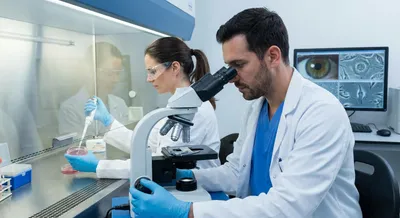
Scientists have long dreamed of replacing lost RGCs by transplanting new cells into the retina. If new ganglion cells could be made to survive and...
Visual field loss from conditions like glaucoma can go unnoticed. Start a free trial and screen for potential blind spots in minutes.
Eye research is the scientific study of how the eye works, what causes vision problems, and how to prevent or treat those problems. It includes basic lab work on cells and tissues, studies in animals, and clinical studies with people. Researchers study the biology of the retina, optic nerve, lens, cornea, and other parts of the eye to understand disease processes like glaucoma, macular degeneration, diabetic eye disease, and inherited disorders. They also develop and test new tools such as imaging machines, drugs, surgical techniques, gene therapies, and implants. Eye research looks at both preventing vision loss and restoring sight when possible. It uses many methods, from genetic testing and cell biology to clinical trials that measure how well a new treatment works and how safe it is. This work often leads to better screening methods, earlier diagnosis, and treatments that slow or stop vision loss. Because vision affects independence, work, and quality of life, advances in eye research can have a big impact on people's daily lives. Funding, ethical oversight, and long-term follow-up are all important parts of doing this research well, so discoveries move safely from the lab to real patients.