
Methods of Visual Field Testing in Glaucoma: How They Differ and What Each Reveals
However, FDT is not perfect. It also relies on patient responses and has test-retest variability (some studies found SAP still predicted...
Deep research and expert guides on maintaining your visual health.
However, FDT is not perfect. It also relies on patient responses and has test-retest variability (some studies found SAP still predicted...
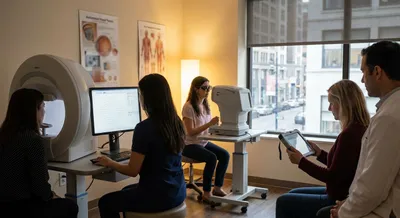
Standard automated perimetry is a commonly used computerized method for measuring sensitivity at many points across the visual field. During the test, the person looks at a central target and presses a button when they see small light spots that appear at different locations and intensities on a screen. The machine uses software to find the dimmest light the person can detect at each spot, producing a detailed map of visual sensitivity. This method is widely used because it gives reproducible, quantitative information that clinicians rely on for diagnosis and monitoring. The test typically provides summary numbers that describe overall loss and localized defects, making it easier to track changes over time. Reliability depends on the patient’s attention and consistent responses, so the device also records measures such as missed stimuli and false responses to judge quality. Standard automated perimetry is particularly important in managing glaucoma because it helps detect progression and supports decisions about changing treatment. It can also reveal visual field problems from other causes, like stroke or retinal disease, by showing characteristic patterns of loss. Limitations include the time required, potential fatigue, and a learning effect where results improve after repeated experience. Despite these drawbacks, its objectivity, detailed maps, and broad clinical use make it a cornerstone of modern eye care.