
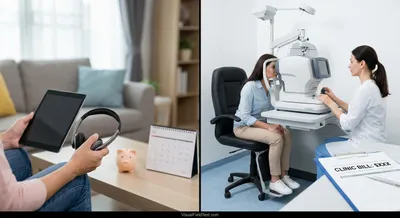
Economics of high-frequency home monitoring versus clinic-based perimetry
Clinic perimetry is very reliable but requires specialized equipment (like a Humphrey Field Analyzer) and trained staff. It can be costly and...
Deep research and expert guides on maintaining your visual health.
Clinic perimetry is very reliable but requires specialized equipment (like a Humphrey Field Analyzer) and trained staff. It can be costly and...

Home readings can also serve as early safety signals. Protocols typically pre-specify pressure thresholds or warning rules. For instance, the...
Blind spots often develop gradually without symptoms. Start a free trial and take a quick visual field test to spot changes early.
Find Out NowPatient adherence means how well a person follows the health care plan their clinician recommends. This includes taking medicines at the right times and doses, using treatments or devices as instructed, showing up for follow-up appointments, and making lifestyle changes like diet or exercise. Adherence is different from simply agreeing with a plan; it’s the actual day-to-day behavior that makes the plan work. Many things affect whether someone follows a plan, such as how complicated the regimen is, side effects, cost, memory, and support from family or health professionals. Clinicians and researchers measure adherence in various ways, including asking patients, reviewing prescription refills, counting doses, or using electronic tools that record use. Good adherence tends to lead to better health outcomes, faster improvement, and fewer complications from chronic conditions. Poor adherence can make treatments look less effective than they are, cause unnecessary worsening of illness, and increase health care costs through extra visits and hospitalizations. Understanding and improving adherence helps care teams choose simpler regimens, reduce burdens, and offer reminders or support that make it easier for people to stay on track. For clinical studies, knowing whether participants are following instructions is crucial to judge a treatment’s true effect and to keep people safe.