
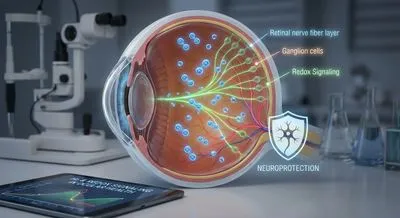
Molecular Hydrogen and Redox Signaling in Ocular Neuroprotection
Beyond pressure-related injury, H₂ has shown benefit in other eye models. In diabetic-like rodents, oral H₂ water improved abnormal retinal blood...
Deep research and expert guides on maintaining your visual health.
Beyond pressure-related injury, H₂ has shown benefit in other eye models. In diabetic-like rodents, oral H₂ water improved abnormal retinal blood...
Blind spots often develop gradually without symptoms. Start a free trial and take a quick visual field test to spot changes early.
Find Out NowRedox signaling describes how cells use chemical reactions that move electrons around to send messages and regulate behavior. These reduction-oxidation reactions change the charge state of molecules and often produce short-lived reactive species such as hydrogen peroxide. In small, controlled amounts these reactive molecules act as important messengers that instruct cells to grow, divide, move, or respond to stress. The balance between producing these reactive molecules and removing them with antioxidant defenses determines whether the signals are helpful or harmful. When this balance is disturbed — for example by too much production or too little removal — communication can break down and contribute to aging, inflammation, and disease. Researchers study redox signaling to understand how cells adapt to their environment and to find ways to restore healthy balance using drugs or lifestyle interventions. Studying these chemical messages is challenging because they act quickly and locally, but new tools are improving our ability to observe and influence them. Understanding redox signaling is important because it underlies fundamental decisions in cells and offers targets for therapies that correct faulty communication without shutting down normal function.