
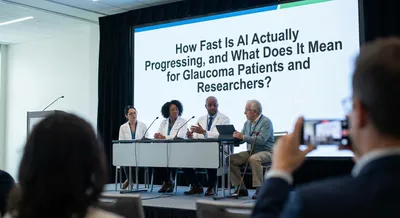
How Fast Is AI Actually Progressing, and What Does It Mean for Glaucoma Patients and Researchers?
Researchers measure AI progress by performance on challenging tasks (benchmarks) and by tracking improvements in model design, data, and compute. In...
Deep research and expert guides on maintaining your visual health.
Researchers measure AI progress by performance on challenging tasks (benchmarks) and by tracking improvements in model design, data, and compute. In...
Our visual field test is inspired by the perimetry methods eye care professionals use. Check for blind spots and track changes over time.
Test Your VisionAI healthcare refers to using artificial intelligence tools and methods to help deliver medical care and improve health outcomes. It includes computer programs that can analyze medical images, read electronic health records, recommend treatments, monitor patients remotely, and help design new drugs. These systems learn patterns from large amounts of data so they can recognize subtle signs of disease that a person might miss. Because they can process information quickly, they can speed up diagnosis and suggest personalized care plans. Engineers and clinicians work together to train and test these tools so they are accurate and useful in real clinics. The potential benefits are wide: better access to specialist-level analysis in underserved places, more consistent decisions, and more efficient use of doctors' time. AI can also help monitor chronic conditions, catch problems earlier, and support research by finding new patterns in large datasets. At the same time, these tools raise important concerns about patient privacy, the quality of the data used to train them, and the risk of unfair or biased recommendations. Regulation, independent testing, and careful design are needed to make sure AI tools are safe, explainable, and equitable. Overall, AI healthcare matters because, when used responsibly, it can make care faster, more accurate, and more available, but it must be developed and overseen with attention to ethics and safety.