
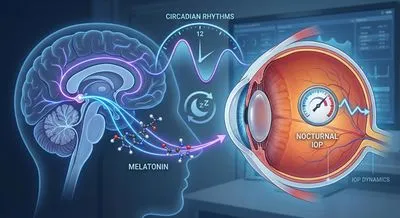
Melatonin, Circadian Rhythms, and Nocturnal IOP Dynamics
Melatonin is not only made by the pineal gland but also produced in the eye itself. Photoreceptors in the retina generate melatonin at night, and the...
Deep research and expert guides on maintaining your visual health.
Melatonin is not only made by the pineal gland but also produced in the eye itself. Photoreceptors in the retina generate melatonin at night, and the...
Our visual field test is inspired by the perimetry methods eye care professionals use. Check for blind spots and track changes over time.
Test Your VisionThe glymphatic system is a fluid‑based cleanup network in the brain and nearby tissues that helps remove waste products and distribute nutrients. It follows pathways alongside blood vessels and uses channels around cells to move cerebrospinal fluid and wash away metabolic debris that accumulates during activity. This clearance process is most active during sleep, when fluid flow increases and the brain can flush out compounds that might otherwise build up and cause harm. A working glymphatic-like system is important because waste accumulation has been linked to cognitive decline and some eye and brain disorders. Similar clearance pathways near the eye may help remove proteins and other byproducts that could damage sensitive nerve cells in the visual system. Keeping this cleanup network healthy — through good sleep, cardiovascular health, and controlling inflammation — supports long‑term brain and eye function. Problems with fluid flow, blood vessel health, or pressure dynamics can slow clearance and may contribute to disease. Studying how these pathways work gives researchers ideas for therapies that enhance waste removal and protect neurons, and it underlines why rest and overall health matter for nervous system maintenance.