
Methods of Visual Field Testing in Glaucoma: How They Differ and What Each Reveals
However, FDT is not perfect. It also relies on patient responses and has test-retest variability (some studies found SAP still predicted...
Deep research and expert guides on maintaining your visual health.
However, FDT is not perfect. It also relies on patient responses and has test-retest variability (some studies found SAP still predicted...
Our visual field test is inspired by the perimetry methods eye care professionals use. Check for blind spots and track changes over time.
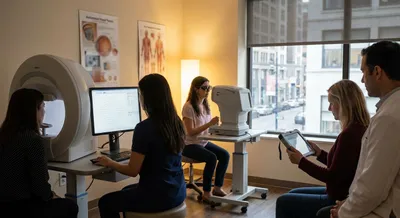
Test Your VisionGlaucoma visual field testing is a way of measuring what a person can see across their entire field of vision, including side (peripheral) and central vision. The test looks for blind spots or areas where sensitivity to light is reduced, which commonly occur when the optic nerve is damaged by glaucoma. It matters because changes in the visual field often appear before a person notices problems in daily life, so testing helps detect the disease early. Doctors use the results to diagnose glaucoma, estimate how advanced it is, and decide whether treatments like eye drops, laser, or surgery are working. The test is usually performed by having the patient look at a central point and press a button when they see small flashes of light at different places. Results are displayed as a map showing areas of reduced sensitivity and include summary numbers that make it easier to monitor change over time. Because the test depends on the patient’s responses, technicians check for reliability by noting missed responses or false alarms and may repeat testing when needed. Different machines and methods vary in speed, level of detail, and comfort, so eye care providers choose the approach that fits each patient’s needs. While the procedure is painless and noninvasive, it can be tiring and requires concentration, so repeat tests are often necessary to build an accurate picture. Regular visual field testing is an important part of long-term eye care for people at risk of or living with glaucoma.