
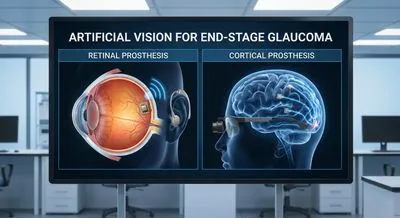
Artificial Vision for End-Stage Glaucoma: Retinal vs. Cortical Prostheses
In conditions like retinitis pigmentosa or macular degeneration, the photoreceptors die but RGCs and optic nerve remain intact () (). Retinal...
Deep research and expert guides on maintaining your visual health.
In conditions like retinitis pigmentosa or macular degeneration, the photoreceptors die but RGCs and optic nerve remain intact () (). Retinal...
Our visual field test is inspired by the perimetry methods eye care professionals use. Check for blind spots and track changes over time.
Test Your VisionNeurosurgery is the medical specialty that treats problems of the brain, spinal cord, nerves, and nearby blood vessels. Neurosurgeons use surgery and other procedures to remove tumors, relieve pressure, repair injuries, and correct structural problems that affect how the nervous system works. They rely on imaging tools like MRI and CT scans to map the area precisely and often use microscopes, tiny instruments, and navigation systems during operations. Some procedures are open surgeries, while others are minimally invasive, using small incisions or endoscopes to reach deep areas. Because the nervous system controls movement, sensation, thinking, and many body functions, these operations are delicate and require careful planning and steady hands. This work matters because neurosurgery can prevent permanent damage, relieve pain, restore function, and sometimes save lives when conditions threaten critical areas. It carries risks such as infection, bleeding, or changes in neurologic function, so thoughtful evaluation, consent, and post-operative care are important. Recovery often includes hospital time, medications, and rehabilitation like physical or occupational therapy to regain strength and skills. Advances in imaging, surgical planning, and technology have made many procedures safer and expanded treatment options for conditions that once had few solutions.