
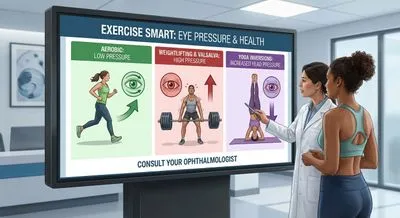
Exercise Smart: Aerobic vs Weightlifting, Valsalva, and Yoga Inversions
These spikes matter because sudden high IOP can strain the optic nerve and blood vessels in the eye. In fact, heavy straining has been linked to eye...
Deep research and expert guides on maintaining your visual health.
These spikes matter because sudden high IOP can strain the optic nerve and blood vessels in the eye. In fact, heavy straining has been linked to eye...
Visual field loss from conditions like glaucoma can go unnoticed. Start a free trial and screen for potential blind spots in minutes.
Weightlifting is a form of resistance training that uses weights or other resistance to make muscles work harder than they do at rest. It includes exercises with free weights (like dumbbells and barbells), machines, kettlebells, and even bodyweight moves such as push-ups and squats. The goal is to challenge muscles through repeated movements so they adapt by getting stronger, bigger, or more enduring. Benefits include increased muscle strength and tone, improved bone density, better balance and posture, and a higher resting metabolism that helps with weight control. Training typically happens in sets and repetitions, and gains come from gradually increasing the weight or difficulty — a principle called progressive overload. Proper form and controlled movement are more important than lifting very heavy weights, because good technique reduces injury risk. Breathing steadily during lifts and allowing rest between sessions for recovery are key practices. Beginners should consider guidance from a trainer or a reliable program to learn safe progressions and develop a consistent routine.