
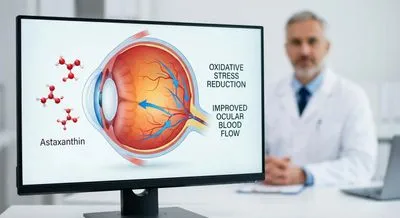
Astaxanthin for Oxidative Stress and Ocular Blood Flow
Astaxanthin protects eye cells from oxidative damage. In animal models of eye disease, AXT reduced markers of stress and inflammation in the retina...
Deep research and expert guides on maintaining your visual health.
Astaxanthin protects eye cells from oxidative damage. In animal models of eye disease, AXT reduced markers of stress and inflammation in the retina...
Track peripheral vision changes between eye doctor visits. Start your free trial and get results in under 5 minutes.
Visual acuity is a measure of how clearly you can see fine details at a given distance, and it is often what people mean when they say "how good your eyesight is." It is commonly tested with charts of letters or symbols that get smaller on each line; the results are reported as fractions like 20/20, where the first number is the testing distance and the second number represents the smallest line a person with normal vision can read. Higher acuity means you can see smaller details, while lower acuity means objects appear blurrier or you need them closer to read. This measure matters because it affects everyday activities such as reading, driving, recognizing faces, and doing precise work. Many factors can change visual acuity temporarily or permanently, including refractive errors like nearsightedness and farsightedness, eye diseases, injuries, and even fatigue or poor lighting. Glasses, contact lenses, or refractive surgery can often correct reduced acuity caused by refractive issues, while other causes may require medical treatment. Regular eye exams help detect changes early and ensure the right corrections or treatments are used to keep vision clear. Knowing your visual acuity helps you and your eye care professional make informed choices about safety, independence, and quality of life.