
Methods of Visual Field Testing in Glaucoma: How They Differ and What Each Reveals
However, FDT is not perfect. It also relies on patient responses and has test-retest variability (some studies found SAP still predicted...
Deep research and expert guides on maintaining your visual health.
However, FDT is not perfect. It also relies on patient responses and has test-retest variability (some studies found SAP still predicted...
Our visual field test is inspired by the perimetry methods eye care professionals use. Check for blind spots and track changes over time.
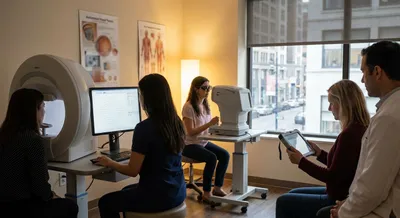
Test Your VisionTablet-based perimetry refers to visual field testing performed using a tablet computer or similar touchscreen device instead of a traditional perimeter instrument. These apps and systems present visual stimuli on the tablet screen while the patient looks at a central fixation point, tapping or signaling when they detect targets; the software then maps which parts of the peripheral vision can see the stimuli. The main advantages are portability, lower cost, and the potential to bring testing into primary care clinics, community settings, or even patients' homes. That accessibility can increase screening rates, enable remote monitoring, and make follow-up easier for people who cannot come to specialized clinics. However, tablet-based tests have limitations: the smaller screen size restricts the extent of peripheral vision that can be tested, and results depend on careful control of testing distance, ambient light, and head and eye position. Calibration of screen brightness and colors is also important to ensure consistent results, and not all tablet systems are equally validated or approved by regulators. Because of these factors, tablet tests are often used as screening tools or as complements to, rather than replacements for, full clinical perimetry. Tablet-based perimetry matters because it lowers barriers to vision testing and supports early detection and ongoing monitoring in more settings, potentially catching problems earlier and improving access to care. When properly validated and used with attention to setup and instructions, tablet-based tests can be a practical, patient-friendly option for expanding visual field assessment outside traditional eye clinics.