
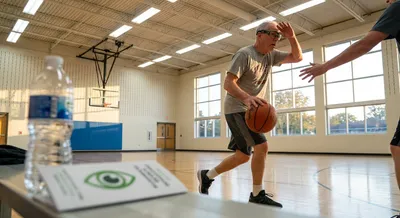
Basketball and Glaucoma: Dynamic Cardio with Contact and Glare Considerations
Basketball also provides important social and emotional benefits. Social sports help reduce stress, build confidence, and combat isolation. A...
Deep research and expert guides on maintaining your visual health.
Basketball also provides important social and emotional benefits. Social sports help reduce stress, build confidence, and combat isolation. A...
Screen your peripheral vision from home — no downloads, no waiting rooms. Sign up for a free trial and test in under 5 minutes.
Sports injuries are physical harms that happen during exercise, training, or games, and they range from mild strains to more serious damage like fractures or concussions. Common acute injuries include sprained ankles, pulled muscles, bruises, and cuts, while overuse injuries such as tendonitis develop gradually from repeated stress. The risk depends on the activity, how much you train, your technique, and whether you use proper equipment and warm up correctly. Symptoms can include pain, swelling, reduced movement, or changes in balance and coordination, and recognizing them early helps prevent worsening. Simple first aid like rest, ice, compression, and elevation can help many minor injuries, but more severe cases may need medical evaluation, imaging, or physical therapy. Prevention matters: good conditioning, proper technique, adequate rest, and the right protective gear lower the chance of getting hurt. Coaches, trainers, and healthcare professionals can teach safe training plans and recovery steps so athletes return to activity at the right pace. Ignoring pain or returning too quickly can lead to chronic problems that affect performance and everyday life. Rehabilitation after an injury focuses on restoring strength, flexibility, and confidence to reduce the risk of reinjury. Understanding common sports injuries helps you recognize warning signs and take smart steps to stay active and healthy.