
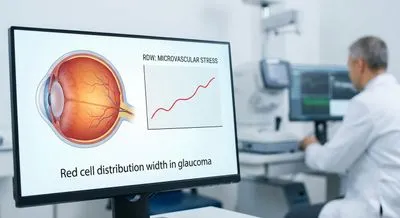
Red cell distribution width as a microvascular stress marker in glaucoma
RDW is one number in a CBC blood test, which most people can get through their doctor or even direct-to-consumer lab services. The CBC reports your...
Deep research and expert guides on maintaining your visual health.
RDW is one number in a CBC blood test, which most people can get through their doctor or even direct-to-consumer lab services. The CBC reports your...
Our visual field test is inspired by the perimetry methods eye care professionals use. Check for blind spots and track changes over time.
Test Your VisionRed cell distribution width measures how varied the sizes of your red blood cells are. It is reported as part of a routine complete blood count and usually appears as a percentage or a size measurement. A low number means most of the red cells are about the same size; a high number means there is a wide mix of small and large cells. High values can occur with different types of anemia, such as iron deficiency or shortages of vitamin B12 or folate, and when the body is breaking down blood cells faster than it replaces them. Chronic illnesses, inflammation, liver or kidney disease, and some heart and lung conditions can also raise this value. Doctors use this measure to help figure out why someone feels weak or is anemic and to monitor whether treatments like iron supplements are working. It has grown in usefulness because higher readings can sometimes predict worse outcomes in heart disease and other serious illnesses, so it can act as a warning sign that more investigation is needed. Importantly, it does not provide a specific diagnosis on its own—other blood tests and a medical history are needed to find the exact cause. Lab methods and normal ranges can vary between hospitals, so your provider interprets this number together with other results and your symptoms. Because it is inexpensive and widely available, this measurement is a handy first step in spotting blood problems and broader health concerns.