
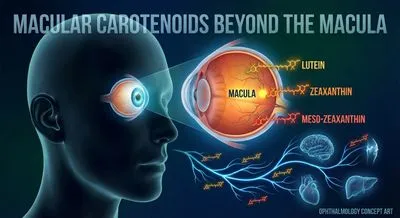
Macular Carotenoids (Lutein, Zeaxanthin, Meso-zeaxanthin) Beyond the Macula
Macular carotenoids act as optical filters and antioxidants in the eye. By absorbing short-wavelength light and scavenging reactive oxygen species...
Deep research and expert guides on maintaining your visual health.
Macular carotenoids act as optical filters and antioxidants in the eye. By absorbing short-wavelength light and scavenging reactive oxygen species...
Macular pigment is the collective name for a group of yellowish pigments that sit in the central area of the retina responsible for sharp, detailed vision. These pigments come mainly from three dietary carotenoids and act as a natural sunshade, absorbing short-wavelength blue light before it reaches light-sensitive cells. By filtering that light and reducing scatter, the pigment improves contrast, reduces glare, and helps the eye form clearer images in bright or hazy conditions. The pigment also has antioxidant effects, which help neutralize harmful molecules and protect retinal cells from long-term damage. The amount of this pigment varies between people and can decline with age or inadequate diet, potentially affecting visual quality and increasing vulnerability to degenerative changes. Eating foods rich in carotenoids or taking supplements can increase the density of the pigment, often improving measures like contrast sensitivity and glare tolerance. Health professionals sometimes measure pigment density as an indicator of eye health and to guide dietary or supplement choices. Overall, macular pigment matters because it enhances everyday visual performance and provides a layer of protection for the most important part of the eye for clear, central vision.