
Selective Laser Trabeculoplasty in the Era of OTC Blood Thinners: Hyphema and IOP Spikes
SLT and ALT aim to improve fluid drainage from the eye to lower the pressure. In ALT, the argon laser causes visible burns and scarring on the...
Deep research and expert guides on maintaining your visual health.
SLT and ALT aim to improve fluid drainage from the eye to lower the pressure. In ALT, the argon laser causes visible burns and scarring on the...
Screen your peripheral vision from home — no downloads, no waiting rooms. Sign up for a free trial and test in under 5 minutes.
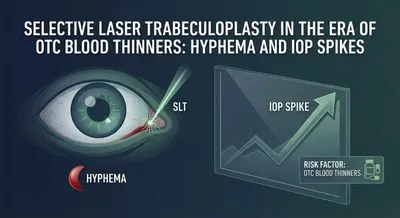
An IOP spike refers to a sudden rise in the fluid pressure inside the eye, known as intraocular pressure. Normal pressure helps the eye maintain its shape and function, but a sharp increase can stress the optic nerve and other eye tissues. Causes include blocked drainage of the eye’s fluid, internal bleeding, inflammation, certain drugs, or reactions after eye procedures. People may experience eye pain, blurred vision, halos around lights, headache, nausea, or they may have no symptoms at all. Measuring pressure with a tonometer is the reliable way to detect a spike. Treatment focuses on quickly lowering pressure and can include eye drops, oral or intravenous medicines, laser therapy, or surgery in severe cases. Prompt care matters because sustained high pressure can damage the optic nerve and lead to permanent vision loss. If you notice sudden visual changes or severe eye pain, quick evaluation is important to protect sight.