
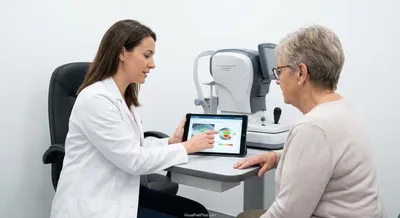
The Future of Glaucoma Care May Be Personal: Matching Treatment to Each Patient’s Risk
Today we are on the brink of truly personalized glaucoma care, where doctors will tailor follow-up plans and treatments to each person’s unique risk...
Deep research and expert guides on maintaining your visual health.
Today we are on the brink of truly personalized glaucoma care, where doctors will tailor follow-up plans and treatments to each person’s unique risk...
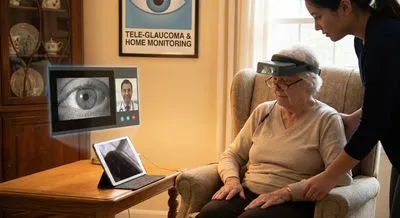
Intraocular pressure (IOP) is the most important modifiable risk factor in glaucoma. Remote IOP monitoring lets patients record pressures at home...
Our visual field test is inspired by the perimetry methods eye care professionals use. Check for blind spots and track changes over time.
Test Your VisionHealth equity means that everyone has a fair and just opportunity to be as healthy as possible, no matter who they are or where they live. It recognizes that social, economic, and environmental factors — like income, education, housing, and access to care — can create differences in health outcomes that are avoidable. Working toward health equity involves identifying and removing barriers that lead to these unfair differences, such as lack of transportation, language barriers, or unequal access to medical services. It also means designing policies and programs that meet the specific needs of different communities rather than using a one-size-fits-all approach. Health equity matters because when people have similar chances to stay healthy, overall population health improves and fewer resources are spent treating preventable problems. Addressing inequities builds trust in the health system and helps communities recover more quickly from crises. It also promotes social fairness and can reduce long-term costs by preventing advanced illness. Progress toward health equity is measured by tracking differences in outcomes and making changes when certain groups are consistently worse off. In short, health equity is about creating a health system and a society where everyone can thrive and no one is left behind.