
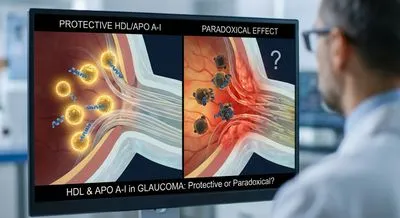
HDL cholesterol and apolipoprotein A-I: protective or paradoxical in glaucoma?
In general health, HDL carries cholesterol from tissues back to the liver and has anti-inflammatory and antioxidant actions. For example, HDL...
Deep research and expert guides on maintaining your visual health.
In general health, HDL carries cholesterol from tissues back to the liver and has anti-inflammatory and antioxidant actions. For example, HDL...
Blind spots often develop gradually without symptoms. Start a free trial and take a quick visual field test to spot changes early.
Find Out NowHDL function describes what high-density lipoprotein particles actually do in the body, not just how many of them are present. One key job is carrying excess cholesterol away from cells and blood vessel walls back to the liver for processing and removal, a process often called reverse cholesterol transport. HDL particles also have protective actions such as reducing inflammation, preventing harmful oxidation of other fats, and helping maintain healthy blood vessel lining. Because HDL particles carry different proteins and enzymes, their activity and quality can vary a lot from person to person. That variation means a high HDL level by itself does not always guarantee protection if the particles are not working properly. Lifestyle factors like diet, exercise, smoking, and conditions that cause inflammation can change how well HDL performs. Measuring or understanding HDL function gives a clearer picture of cardiovascular risk than looking at HDL amount alone, and researchers are exploring ways to improve function with targeted treatments and healthy habits. Knowing about HDL function helps explain why some people with seemingly normal cholesterol numbers still develop disease and why personalized care matters.