
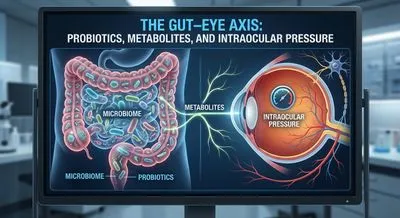
The Gut–Eye Axis: Probiotics, Metabolites, and Intraocular Pressure
SCFAs are fatty acids with fewer than six carbon atoms, mainly acetate, propionate, and butyrate, produced by gut bacteria digesting fiber. They...
Deep research and expert guides on maintaining your visual health.
SCFAs are fatty acids with fewer than six carbon atoms, mainly acetate, propionate, and butyrate, produced by gut bacteria digesting fiber. They...
The gut-eye axis refers to the idea that the gut and the eyes communicate with each other through the immune system, nerves, and chemical signals. It means that what happens in your digestive system — including the balance of microbes, the chemicals they produce, and the food you eat — can influence eye health. For example, gut-driven inflammation or certain metabolites traveling in the bloodstream can affect tissues in and around the eye, altering how they function. This connection helps explain why some people with digestive or immune conditions also experience eye problems. Researchers are studying the gut-eye axis because it opens new ways to prevent or treat eye conditions by targeting the gut. That could include changing diet, adjusting medications, or using therapies that alter gut microbes. The idea matters because it broadens our view of eye health beyond local treatments like eye drops or surgery. Understanding this link could lead to gentler, more holistic approaches that reduce inflammation and protect vision. The field is still developing, so scientists continue to test which gut changes most strongly affect different eye conditions. Knowing about the gut-eye axis encourages people and doctors to consider whole-body health when addressing eye issues.