
What Are the Symptoms of Glaucoma
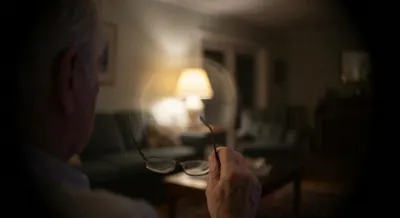
As POAG progresses, symptoms emerge only gradually. Patients may describe difficulty discriminating contrast, or an unusual glare or halo around...
Deep research and expert guides on maintaining your visual health.
As POAG progresses, symptoms emerge only gradually. Patients may describe difficulty discriminating contrast, or an unusual glare or halo around...
Screen your peripheral vision from home — no downloads, no waiting rooms. Sign up for a free trial and test in under 5 minutes.
A glaucoma emergency refers to a sudden, severe rise in pressure inside the eye that threatens the optic nerve and requires immediate medical attention. The most common example is an acute attack where the eye’s drainage angle becomes blocked quickly, so fluid can’t escape and pressure spikes over hours. People often experience intense eye pain, headache, nausea or vomiting, sudden blurry vision, colored halos around lights, and a red, hard eye; the pupil may look mid-dilated and not react normally to light. Because the optic nerve can be injured very quickly when pressure is extremely high, this is an urgent situation — delaying care can lead to permanent vision loss. Emergency diagnosis is made by measuring eye pressure and examining the front of the eye, often with a slit lamp and a check of the drainage angle. Initial treatment focuses on lowering pressure fast using eye drops and sometimes pills or intravenous medicines; in many cases a laser procedure or surgery is then done to restore proper drainage and prevent another attack. After an emergency is controlled, follow-up care is needed to monitor the optic nerve and visual field and to prevent recurrence. If you suddenly get severe eye pain with vision changes, seek emergency evaluation rather than waiting, because prompt treatment can save vision.