
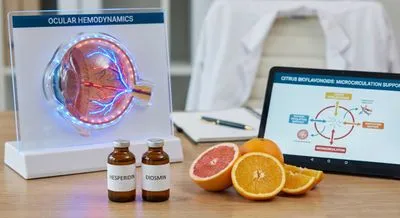
Citrus Bioflavonoids (Hesperidin, Diosmin) for Ocular Hemodynamics
Blood vessels relax when their lining cells (endothelium) make the gas nitric oxide (NO). Hesperidin itself is a sugar-linked molecule that is broken...
Deep research and expert guides on maintaining your visual health.
Blood vessels relax when their lining cells (endothelium) make the gas nitric oxide (NO). Hesperidin itself is a sugar-linked molecule that is broken...
Visual field loss from conditions like glaucoma can go unnoticed. Start a free trial and screen for potential blind spots in minutes.
Flavonoid supplements are concentrated preparations of plant-derived compounds commonly found in fruits, vegetables, tea, cocoa, and herbs. They are designed to provide higher and more consistent amounts of these compounds than a typical diet might supply. People use them for their potential antioxidant, anti-inflammatory, and circulatory-supporting properties. Scientific evidence varies by the specific compound and the condition studied, with some showing promising benefits and others needing more research. The effect of a supplement depends on the exact flavonoid, its formulation, dose, and how well your body absorbs it. Product quality and purity can vary, so choosing reputable brands and checking for third-party testing is important. Like all concentrated products, they can interact with medications or cause side effects at high doses, so caution is warranted. Generally, obtaining flavonoids from a varied diet of whole foods is recommended, and supplements are best considered for specific needs after consulting a healthcare professional.