
Adherence That Sticks: Storage, Travel, and Tech Tools for Glaucoma Drops
The key to taking glaucoma drops regularly is tying them to habits you already do. For example, put your eye drops next to your toothbrush or coffee...
Deep research and expert guides on maintaining your visual health.
The key to taking glaucoma drops regularly is tying them to habits you already do. For example, put your eye drops next to your toothbrush or coffee...
Our visual field test is inspired by the perimetry methods eye care professionals use. Check for blind spots and track changes over time.
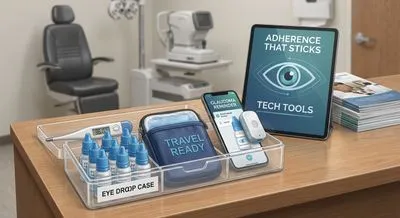
Test Your VisionEyedrop storage means keeping your eye medicine in a safe, clean place so it stays effective and won’t harm your eyes. Some eye drops need to be stored at room temperature, others must be kept in the refrigerator, and a few are sensitive to light or heat. Following the storage directions on the label helps preserve the strength and sterility of the solution. Keeping the bottle cap closed, avoiding contact between the dropper tip and any surface, and washing hands before use all reduce the chance of contamination. Proper storage also includes noting the expiration date and discarding any drops that change color, smell, or clarity. When you travel, you should plan ahead by using insulated cases or checking airline rules for medicines that need refrigeration. Organizing drops in a dedicated spot at home and using small reminders can make it easier to take them consistently. Safe placement away from children and pets prevents accidental ingestion and waste. Some people store information about each bottle, such as the opening date and dosing schedule, which helps avoid mistakes. Good storage is a simple step that protects your vision, reduces infection risk, and makes your treatment work as intended.