
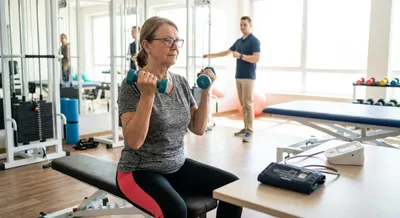
General Resistance Training and Glaucoma: Building Strength While Managing IOP Spikes
Heavy vs. Moderate Loads: Multiple studies find that heavier weights cause bigger IOP spikes. For example, one review noted that lifting heavy loads...
Deep research and expert guides on maintaining your visual health.
Heavy vs. Moderate Loads: Multiple studies find that heavier weights cause bigger IOP spikes. For example, one review noted that lifting heavy loads...
Visual field loss from conditions like glaucoma can go unnoticed. Start a free trial and screen for potential blind spots in minutes.
An exercise protocol is a planned and organized set of exercises that spells out what to do, how often, and how hard to work. It usually includes the types of exercises, the order to do them, the number of repetitions and sets, rest times between efforts, and how often to repeat the sessions each week. A clear protocol helps people train toward specific goals—like building strength, improving balance, or rehabilitating after an injury—because it provides structure and measurable steps. It also reduces the risk of overtraining or doing exercises incorrectly by giving guidance on intensity and progression. Good protocols include warm-up and cool-down steps, clear progression rules, and safety precautions tailored to a person’s fitness level and medical history. Following a written plan makes it easier to track progress and adjust the routine when improvements occur or if problems appear. Health professionals, coaches, or physical therapists often design protocols to match individual needs. If you’re starting a new program, using a protocol can help you be consistent, stay motivated, and train more safely. Always tell your provider about any medical conditions so the protocol can be modified for your safety.