
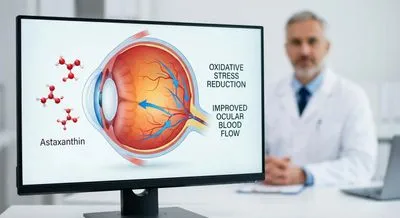
Astaxanthin for Oxidative Stress and Ocular Blood Flow
Astaxanthin protects eye cells from oxidative damage. In animal models of eye disease, AXT reduced markers of stress and inflammation in the retina...
Deep research and expert guides on maintaining your visual health.
Astaxanthin protects eye cells from oxidative damage. In animal models of eye disease, AXT reduced markers of stress and inflammation in the retina...
Visual field loss from conditions like glaucoma can go unnoticed. Start a free trial and screen for potential blind spots in minutes.
Accommodative function is the eye’s ability to change focus between distant and near objects by adjusting the shape of the lens. This process is controlled mainly by the ciliary muscle and the elastic lens: when the muscle contracts, the lens becomes rounder for near vision, and when it relaxes, the lens flattens for distance vision. Good accommodative ability lets you read, use a phone, and switch focus quickly while driving or doing everyday tasks. As people age, the lens becomes less flexible and the ciliary muscle may weaken, which reduces accommodation and leads to the common condition known as presbyopia. Problems with accommodation can also come from eye injuries, certain medications, nervous system disorders, or long-term eye strain. Eye care professionals measure accommodation with specific tests to determine how well the lens responds and to diagnose issues. Solutions include reading glasses, bifocals, progressive lenses, contact lenses designed for near tasks, and surgical options that change the lens or cornea shape. New treatments aim to restore or mimic natural accommodation, including lens implants, exercises, and drugs that target the ciliary muscle or lens properties. Maintaining overall eye health, getting regular checkups, and addressing underlying health conditions can help preserve accommodative function for as long as possible.