
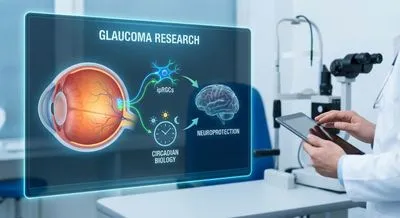
Circadian Biology, ipRGCs, and Neuroprotection in Glaucoma
In simple terms: because glaucoma hurts the very cells that tell our body when to wake and sleep, a vicious cycle can start where bad sleep and...
Deep research and expert guides on maintaining your visual health.
In simple terms: because glaucoma hurts the very cells that tell our body when to wake and sleep, a vicious cycle can start where bad sleep and...
Our visual field test is inspired by the perimetry methods eye care professionals use. Check for blind spots and track changes over time.
Test Your VisionPupillometry is the measurement of the pupil’s size and how it changes in response to light or other stimuli. Using infrared cameras or specialized sensors, it records how quickly the pupil constricts when light is introduced, how much it narrows, and how it dilates afterward, producing precise numbers about those reactions. Because the pupil response is mediated by pathways that connect the eye to the brain and the autonomic nervous system, these measurements offer a noninvasive window into nervous system function. Clinicians and researchers use pupillometry to study vision health, neurological conditions, levels of alertness, and even emotional or cognitive states, since the pupil responds differently under stress, fatigue, or during cognitive tasks. The technique can detect subtle changes that might not be obvious on a routine exam, making it valuable for early diagnosis or monitoring of disease. Results are influenced by ambient light, medications, and age, so testing conditions need to be controlled for reliable interpretation. Portable pupillometers allow testing in clinics, hospitals, or research settings, and the data can be analyzed with software to extract meaningful metrics. Because it is quick, painless, and objective, pupillometry is a practical tool for assessing how the eye and brain respond together. Its ability to reveal underlying physiological changes is why it is increasingly used in both healthcare and scientific studies.