
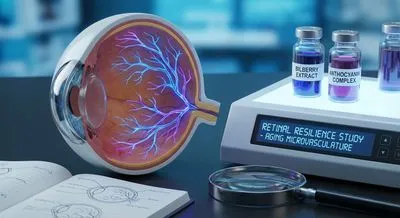
Anthocyanins and Bilberry Extracts: Retinal Resilience and Aging Microvasculature
Animal research confirms that bilberry anthocyanins protect retinal cells by enhancing antioxidant systems and damping inflammation. In a rabbit...
Deep research and expert guides on maintaining your visual health.
Animal research confirms that bilberry anthocyanins protect retinal cells by enhancing antioxidant systems and damping inflammation. In a rabbit...
Our visual field test is inspired by the perimetry methods eye care professionals use. Check for blind spots and track changes over time.
Test Your VisionVascular aging describes how blood vessels change as we get older, becoming stiffer, less flexible, and sometimes narrowed by buildup on the vessel walls. The inner lining of blood vessels can lose its ability to relax and regulate flow, and the walls can thicken or develop deposits that reduce circulation. These changes raise the risk of high blood pressure, heart disease, stroke, and reduced blood supply to organs like the brain, kidneys, and eyes. Vascular aging is partly a normal process, but lifestyle factors such as smoking, poor diet, lack of exercise, high cholesterol, and uncontrolled diabetes make it happen faster. Understanding vascular aging matters because it helps explain why the risk of many chronic diseases grows with age and why maintaining blood-vessel health supports long-term well-being. Doctors can measure signs of vascular aging with tests like pulse wave velocity or imaging of vessel walls to estimate risk and guide treatment. Slowing vascular aging is possible: regular physical activity, a heart-healthy diet, blood pressure and lipid control, and managing inflammation all help preserve vessel flexibility. In some cases, medications such as antihypertensives or cholesterol-lowering drugs are used to reduce risk and protect organs affected by poor blood flow.