
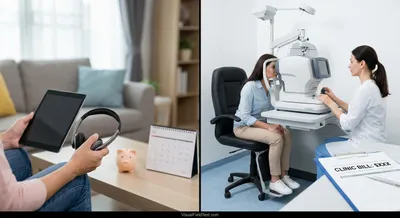
Economics of high-frequency home monitoring versus clinic-based perimetry
Clinic perimetry is very reliable but requires specialized equipment (like a Humphrey Field Analyzer) and trained staff. It can be costly and...
Deep research and expert guides on maintaining your visual health.
Clinic perimetry is very reliable but requires specialized equipment (like a Humphrey Field Analyzer) and trained staff. It can be costly and...
Screen your peripheral vision from home — no downloads, no waiting rooms. Sign up for a free trial and test in under 5 minutes.
Health economics is the study of how health care resources are produced, distributed, and used, and how these choices affect people’s health and well-being. It looks at costs, benefits, access, and fairness in health care systems, combining ideas from economics with knowledge about medicine and public health. Practitioners use tools like cost-effectiveness analysis, budgeting, and economic modeling to compare different health programs and policies. The field asks practical questions such as how to get the most health benefit from limited money and how to design systems that are both efficient and fair. This area matters because decisions about health care funding affect real people’s lives and the sustainability of health systems. For example, health economics can help decide whether a new vaccine should be funded, how to price treatments, or how to design insurance benefits. It also brings attention to trade-offs: spending more on one service means less for another. While numbers and models are central, health economics also considers ethical issues like equity and who benefits most from policies. In short, it provides the evidence and framework needed to make informed choices about health care priorities and spending.