
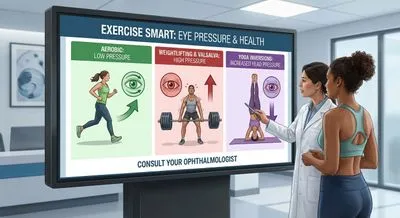
Exercise Smart: Aerobic vs Weightlifting, Valsalva, and Yoga Inversions
These spikes matter because sudden high IOP can strain the optic nerve and blood vessels in the eye. In fact, heavy straining has been linked to eye...
Deep research and expert guides on maintaining your visual health.
These spikes matter because sudden high IOP can strain the optic nerve and blood vessels in the eye. In fact, heavy straining has been linked to eye...
Blind spots often develop gradually without symptoms. Start a free trial and take a quick visual field test to spot changes early.
Find Out NowInversions are yoga poses where your head is lower than your heart or your feet are lifted above your head. Common examples range from gentle ones like legs-up-the-wall to stronger shapes like handstands and headstands. These poses change how gravity affects your body, which can help blood circulation and encourage fluid movement through the lymphatic system. People often notice a feeling of increased focus and calm after practicing inversions because they require balance and concentration. Inversions also build shoulder, arm, and core strength, and they can improve body awareness and confidence as you learn to control your balance. However, they are not right for everyone; people with high blood pressure, certain eye conditions, neck problems, or pregnancy should avoid or modify them. Learning inversions slowly, with proper alignment and possibly the support of a teacher or wall, reduces the risk of injury. With careful practice, inversions can be a refreshing way to vary movement and challenge both body and mind in a safe way if approached with respect for your limits.