
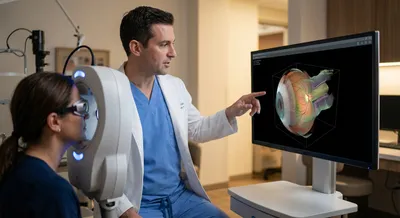
A New Way to Read Eye Scans in Glaucoma: Can 3D Nerve Fiber Shape Improve Detection?
To check the RNFL, doctors commonly use optical coherence tomography (OCT), a non-invasive imaging test that takes cross-sectional “slice” pictures...
Deep research and expert guides on maintaining your visual health.
To check the RNFL, doctors commonly use optical coherence tomography (OCT), a non-invasive imaging test that takes cross-sectional “slice” pictures...
Blind spots often develop gradually without symptoms. Start a free trial and take a quick visual field test to spot changes early.
Find Out NowVision screening is a quick check to see whether someone might have a vision problem that needs further attention. It is usually shorter and simpler than a full eye exam and can be done by nurses, teachers, or trained volunteers using charts, pictures, or automated devices. The goal is to find people who may have trouble seeing clearly, poor depth perception, or other issues that could affect learning, safety, or daily tasks. Screenings are common in schools, community centers, and primary care offices because they can reach many people at low cost. If a screening finds a possible problem, the person is referred for a full eye exam with an eye care professional who can make a diagnosis and recommend treatment. Screenings help catch problems early, when interventions like glasses or therapy can make a big difference. However, they are not diagnostic, so they can miss some conditions or suggest problems that are not present. Because of that, follow-up testing is important whenever a screening indicates a concern. Regular screenings are especially valuable for children and older adults who may not notice gradual changes in their vision. In short, vision screening is a useful first step to identify who needs a thorough eye check.