
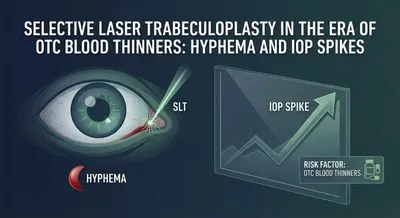
Selective Laser Trabeculoplasty in the Era of OTC Blood Thinners: Hyphema and IOP Spikes
SLT and ALT aim to improve fluid drainage from the eye to lower the pressure. In ALT, the argon laser causes visible burns and scarring on the...
Deep research and expert guides on maintaining your visual health.
SLT and ALT aim to improve fluid drainage from the eye to lower the pressure. In ALT, the argon laser causes visible burns and scarring on the...
Laser trabeculoplasty is a short outpatient procedure that helps lower pressure inside the eye by improving fluid drainage. It targets the eye’s drainage tissue so the eye fluid can flow out more easily, which helps protect the optic nerve and reduce the risk of vision loss. The procedure uses a focused laser beam and is usually done in a clinic; most treatments take only a few minutes and people often go home the same day. Many patients experience a meaningful drop in eye pressure that can slow the progression of certain eye diseases. It is commonly considered when eye drops do not adequately control pressure or when patients want to reduce their reliance on daily medications. There are different laser approaches and some can be repeated if pressure rises again later, which makes the procedure flexible for long-term care. Recovery tends to be quick, but follow-up visits are important so the doctor can check pressure and treat any inflammation if it appears. Risks are generally low but can include temporary pressure spikes, inflammation, or rarely bleeding inside the eye, so doctors weigh benefits against possible complications. Not every person responds the same way, and some still need eye drops or additional treatments afterward. Understanding how the procedure works and what to expect helps people make informed choices about protecting their vision.