
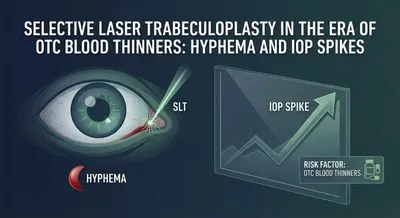
Selective Laser Trabeculoplasty in the Era of OTC Blood Thinners: Hyphema and IOP Spikes
SLT and ALT aim to improve fluid drainage from the eye to lower the pressure. In ALT, the argon laser causes visible burns and scarring on the...
Deep research and expert guides on maintaining your visual health.
SLT and ALT aim to improve fluid drainage from the eye to lower the pressure. In ALT, the argon laser causes visible burns and scarring on the...
Blood thinners are medicines that slow or reduce the blood’s ability to form clots. There are two main kinds: anticoagulants, which affect proteins involved in clotting, and antiplatelet drugs, which prevent blood cells called platelets from sticking together. Common examples include warfarin and heparin or newer direct anticoagulants, and drugs like aspirin or clopidogrel for antiplatelet therapy. Doctors prescribe them to prevent dangerous clots that can cause stroke, heart attack, deep vein clots, or blockages on medical devices. While they significantly lower the risk of clot-related events, they also raise the risk of bleeding, from easy bruising to more serious bleeding after injury or surgery. Some require regular blood tests and dose adjustments, while others have more predictable dosing but still need careful oversight. Before operations or when injuries occur, medical teams decide whether to pause or continue them to balance clot prevention against bleeding risk. People taking these medicines should inform all their healthcare providers, know the signs of serious bleeding, and carry information about their therapy for emergencies.