
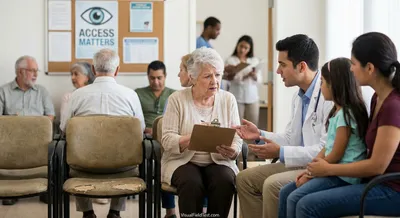
Inequities in access to visual field testing and their outcome consequences
When visual field testing is infrequent, vision loss can slip by unnoticed. Late-stage diagnosis is a common result in underserved populations. Since...
Deep research and expert guides on maintaining your visual health.
When visual field testing is infrequent, vision loss can slip by unnoticed. Late-stage diagnosis is a common result in underserved populations. Since...
Blind spots often develop gradually without symptoms. Start a free trial and take a quick visual field test to spot changes early.
Find Out NowHealth equity vision is the goal of making sure everyone has a fair chance to maintain good eye health, no matter their race, income, age, where they live, or other personal circumstances. It means seeing and fixing the reasons people face worse outcomes, like fewer clinics in certain neighborhoods, language barriers, lack of insurance, or less time to seek care. The idea recognizes that treating everyone the same is not enough when some people start farther behind. This approach matters because unequal access to eye care leads to preventable blindness, delayed diagnoses, and wasted potential across whole communities. Pursuing this goal involves measuring gaps, designing services that meet people where they are, training culturally competent staff, and funding programs that target high-need areas. It also requires involving communities in planning so services match their real needs and building systems that track whether efforts actually reduce disparities. When services are adjusted to the real barriers people face, outcomes improve for individuals and for public health as a whole. In the long run, investing in equity reduces costs from emergency care, supports education and employment, and creates fairer opportunities for everyone.