
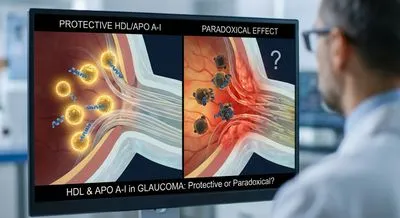
HDL cholesterol and apolipoprotein A-I: protective or paradoxical in glaucoma?
In general health, HDL carries cholesterol from tissues back to the liver and has anti-inflammatory and antioxidant actions. For example, HDL...
Deep research and expert guides on maintaining your visual health.
In general health, HDL carries cholesterol from tissues back to the liver and has anti-inflammatory and antioxidant actions. For example, HDL...
Our visual field test is inspired by the perimetry methods eye care professionals use. Check for blind spots and track changes over time.
Test Your VisionThe cholesterol paradox refers to situations where cholesterol measurements do not match the expected health outcomes. For example, sometimes people with higher levels of certain cholesterol measures appear to have lower short-term mortality, or very high levels that should be protective do not reduce disease risk. These surprising findings can happen for several reasons, including older age, existing illness that lowers cholesterol, and genetic differences that change how cholesterol works. Reverse causation is one explanation: a serious disease can reduce cholesterol, making low cholesterol a marker of poor health rather than a cause. Another reason is that not all cholesterol is the same—how lipoprotein particles function matters as much as their quantity. The paradox highlights limits of using a single cholesterol number to judge health and shows why doctors look at the whole clinical picture. It has pushed researchers to study cholesterol quality and inflammation instead of only focusing on levels. For patients, the lesson is that cholesterol results are one piece of information; doctors consider age, other medical problems, and overall risk when making treatment decisions. Understanding the cholesterol paradox helps explain why personalized care and further research are needed to improve heart disease prevention.