
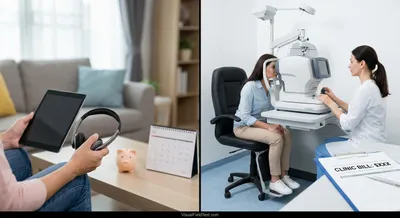
Economics of high-frequency home monitoring versus clinic-based perimetry
Clinic perimetry is very reliable but requires specialized equipment (like a Humphrey Field Analyzer) and trained staff. It can be costly and...
Deep research and expert guides on maintaining your visual health.
Clinic perimetry is very reliable but requires specialized equipment (like a Humphrey Field Analyzer) and trained staff. It can be costly and...
Screen your peripheral vision from home — no downloads, no waiting rooms. Sign up for a free trial and test in under 5 minutes.
Remote patient monitoring means using devices, apps, or sensors to collect health information from someone at home and send that information to their healthcare team. Common examples include blood pressure cuffs, glucose meters, pulse oximeters, wearable activity trackers, and even smartphone apps that record symptoms. The goal is to track health data on a regular basis without requiring a clinic visit. This approach helps doctors see how a person is doing over time instead of relying on a single measurement taken in an office. It can spot small changes early, so problems are treated sooner and complications may be avoided. For people with chronic conditions, remote monitoring can support better day-to-day management and reduce the need to travel for routine checks. It also makes care more convenient and can save time and money for patients and health systems. Privacy, device reliability, and good communication between patient and clinician are important for it to work well. When done right, remote monitoring can improve outcomes and make healthcare more responsive to a person’s real life.