
How Useful Is OCT at Each Stage of Glaucoma?
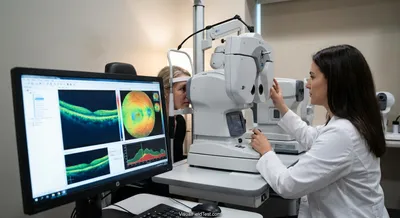
Each OCT result comes with color-coded maps and numbers. Green usually means “within normal limits,” yellow means “borderline,” and red indicates...
Deep research and expert guides on maintaining your visual health.
Each OCT result comes with color-coded maps and numbers. Green usually means “within normal limits,” yellow means “borderline,” and red indicates...
Blind spots often develop gradually without symptoms. Start a free trial and take a quick visual field test to spot changes early.
Find Out NowFloor effect describes a physical or measurement limit where further worsening can no longer be detected because a value has reached its lowest measurable point. In eye care, it usually means that structures being measured—like layers of nerve or tissue in the eye—have thinned as much as the test can show, so additional damage won’t produce a lower reading. That does not necessarily mean the disease has stopped getting worse; it means the instrument or test has run out of range. Because of this, doctors can underestimate how a condition is progressing when relying on a single test that has reached its floor. The floor effect matters most in advanced disease, when small changes still affect sight but aren’t picked up by routine measurements. Clinicians watch for signs that a measurement is at its floor and then turn to other ways of tracking the eye’s health. This can include different kinds of scans, functional tests that measure vision performance, or careful clinical exams. Understanding the floor effect helps patients and doctors avoid false reassurance and make better decisions about treatment and monitoring. It also drives research into newer tests and analysis methods that can detect change beyond current limits.