
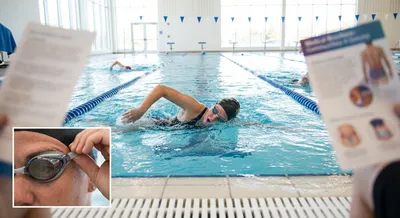
Lap Swimming and Glaucoma: Cardiorespiratory Benefits vs. Goggle and Head Position Issues
However, swimming has some unique eye-related factors. Tight-fitting goggles, the face-down posture of freestyle, and chlorinated pool water can...
Deep research and expert guides on maintaining your visual health.
However, swimming has some unique eye-related factors. Tight-fitting goggles, the face-down posture of freestyle, and chlorinated pool water can...
Screen your peripheral vision from home — no downloads, no waiting rooms. Sign up for a free trial and test in under 5 minutes.
The breaststroke is a swimming style where the swimmer lies on their chest and moves both arms and legs in a symmetrical, cyclical pattern. Arms sweep forward and then pull back beneath the body while the legs perform a whip-like “frog” or breast kick that provides most of the propulsion. Breathing is usually done on each stroke cycle by lifting the head forward so the face clears the water and an inhale can occur before returning into the glide. Timing and coordination between the arm pull, kick, and body glide are what make the stroke efficient and smooth. Compared with faster strokes, this one is often slower but can be gentler on the shoulders and back when done with good form. Because the head can come out of the water regularly, many beginners find it easier to breathe and maintain orientation. That head position also requires attention to neck alignment to avoid strain during long swims. The stroke is useful for recreational exercise, rehabilitation after injury, and competitive racing where rules govern technique. Learning it well improves balance, timing, and leg strength, and it offers a lower-impact way to get cardiovascular exercise. Overall, the breaststroke matters because it provides an accessible, adaptable way to swim for fitness, recovery, and sport when practiced with attention to form.