
Does Angle-Closure Risk Build Up Earlier in Life Than People Think?
Knowing that the eye’s angle may stabilize in midlife is reassuring in that it may not continue to close rapidly in later years. But for at-risk...
Deep research and expert guides on maintaining your visual health.
Knowing that the eye’s angle may stabilize in midlife is reassuring in that it may not continue to close rapidly in later years. But for at-risk...
Screen your peripheral vision from home — no downloads, no waiting rooms. Sign up for a free trial and test in under 5 minutes.
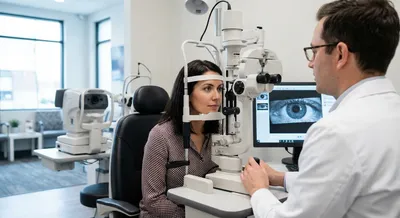
A narrow angle refers to a small or tight space where the iris (the colored part of the eye) meets the cornea in the front of the eye. This is the area where fluid normally drains out of the eye, and when it is narrow the drainage can become partially or fully blocked. Because of that blockage risk, a narrow angle raises the chance of a sudden increase in internal eye pressure that can cause pain, nausea, headache, and rapid vision loss if not treated promptly. Eye doctors look for a narrow angle during a detailed exam, which may include special imaging or a test called gonioscopy to see the drainage area directly. Some people with a narrow angle have warning symptoms like blurred vision or seeing halos around lights, while others have no symptoms until a problem happens. Risk factors include being older, being farsighted, and certain family or ethnic backgrounds. Treatments range from careful observation to procedures that create or widen a pathway for fluid, and in some cases lens surgery helps prevent future attacks. Finding a narrow angle early matters because preventive steps can avoid emergencies and preserve long-term vision.