
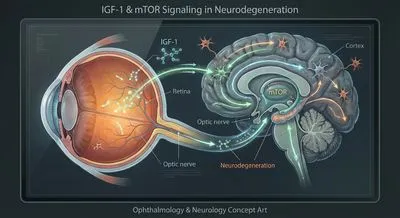
IGF-1, mTOR signalizacija ir neurodegeneracija akyse bei smegenyse
IGF-1 yra nedidelis baltymų hormonas, glaudžiai susijęs su insulinu. Jis gaminamas kepenyse (ir kai kuriuose audiniuose) veikiant augimo hormonui....
시각 건강을 유지하기 위한 심층 연구 및 전문가 가이드.
IGF-1 yra nedidelis baltymų hormonas, glaudžiai susijęs su insulinu. Jis gaminamas kepenyse (ir kai kuriuose audiniuose) veikiant augimo hormonui....
IGF-1 är ett litet proteinhormon nära besläktat med insulin. Det bildas i levern (och i vissa vävnader) under påverkan av tillväxthormon. I kroppen...
IGF-1 ist ein kleines Proteinhormon, das eng mit Insulin verwandt ist. Es wird in der Leber (und in einigen Geweben) unter dem Einfluss von...
IGF-1 je malý proteinový hormon úzce související s inzulinem. Vytváří se v játrech (a v některých tkáních) pod vlivem růstového hormonu. V těle IGF-1...
IGF-1 is a small protein hormone closely related to insulin. It is made in the liver (and in some tissues) under the influence of growth hormone. In...
IGF-1 stands for insulin-like growth factor 1, a hormone that helps cells grow, divide, and survive. It is produced mainly by the liver but also by other tissues in response to growth hormone and the nutrients you eat. IGF-1 works by binding to a receptor on the surface of cells and activating internal signals that encourage protein building, cell division, and resistance to programmed cell death. These actions are important during childhood growth, tissue repair after injury, and for maintaining healthy cells through life. In the brain and eye, IGF-1 supports neurons and other cells, helping them function and recover from stress. Too much IGF-1 activity can promote excessive cell growth and raise the risk of some cancers, while too little can lead to poor growth, reduced tissue maintenance, and frailty. Levels of IGF-1 change with age, diet, illness, and hormonal status, so they connect nutrition and health to long-term outcomes. Doctors and researchers study IGF-1 because adjusting its levels or the signals it controls can affect growth disorders, metabolic health, and degenerative conditions. Understanding IGF-1 helps explain how the body balances growth and repair with long-term well-being.